


Risk of Rain 2 Review: A Chaotic 3D Roguelike That Demands Your Attention


Risk of Rain 2 is a fast-paced roguelike shooter that blends intense third-person combat with deep progression, chaotic item synergies, and endlessly replayable runs. Built around procedural levels and escalating difficulty, the game challenges players to balance speed, risk, and strategy as enemies grow stronger with every passing minute. Whether played solo or in co-op, each run feels uniquely unpredictable, rewarding experimentation and mastery over time.
Table Of Content
- Core Gameplay Loop and Roguelike Structure
- Key Elements of the Roguelike Progression
- How Time-Based Difficulty Reshapes Your Strategy
- Strategic Adaptation in Solo and Team Play
- The Alchemy of Chaos: Item Synergy in Risk of Rain 2
- The Engine of Exponential Power
- How the 3D Space Transforms the Classic Risk of Rain Formula
- Key Transformations in the Third Dimension
- Character Roster and Playstyle Diversity
- Synergy in Solo and Co-op
- Solo Specialists vs. Co-op Champions
- Character Role Breakdown
- How Unlockable Alternate Skills Redefine Character Roles
- Impact on Solo and Cooperative Play
- Is there a noticeable balance gap between early and late-game survivors?
- Key Factors Influencing Survivor Balance
- Progression Systems and Long-Term Motivation
- Verdict: A Self-Reinforcing Cycle of Fun
- Q&A
- How does the transition from 2D to 3D impact the gameplay of Risk of Rain 2 compared to the first game?
- Is the game’s difficulty fair, or does it rely too much on random luck with items?
- What keeps the game interesting after many hours of play?
- How is the cooperative multiplayer experience, and are there any major issues?
In this Risk of Rain 2 review, we break down gameplay mechanics, survivor variety, item systems, difficulty scaling, and overall replay value to help you understand why the game has earned a dedicated fanbase—and whether it’s worth your time in 2026.

Transforming a beloved 2D classic into a fully three-dimensional experience is a monumental risk, yet Hopoo Games’ Risk of Rain 2 executes this leap with astonishing confidence. At its core, it remains a pure roguelike, where each run is a fresh ascent through ever-escalating chaos. The fundamental gameplay loop of collecting randomized items to build overwhelming synergies is brilliantly adapted into a frantic third-person shooter, creating a uniquely addictive formula of power fantasy and desperate survival.
The heart of the experience lies in its compelling sense of progression. While individual runs are self-contained, players permanently unlock new survivors, items, and challenges, giving each failure purpose. This meta-progression system masterfully encourages experimentation with vastly different character abilities, from the agile Huntress to the engineering-focused Captain. Coupled with a steep but fair difficulty curve that scales with time, the game demands both quick reflexes and strategic decision-making.
Risk of Rain 2 truly shines in its seamless multiplayer co-op, where the chaotic synergy of player builds and enemy swarms creates unforgettable, laugh-out-loud moments. Furthermore, the developers have supported the game with substantial free updates, adding entire continents of content, new final bosses, and game-altering mechanics that have consistently refined and expanded the experience long after its initial release.
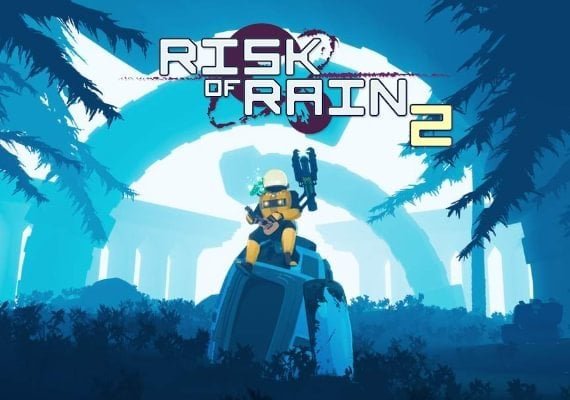
Risk of Rain 2
Core Gameplay Loop and Roguelike Structure
The heart of Risk of Rain 2 is a brilliantly executed roguelike loop that is both simple to grasp and endlessly deep to master. Each run begins with your character crash-landing on an alien planet, tasked with fighting through randomized stages to find a teleporter, survive its charging sequence against hordes of enemies, and eventually escape. The core gameplay is a frantic, third-person shooter where speed and constant movement are key to survival. The genius lies in the snowballing power fantasy: as you defeat monsters, you earn gold to open chests that grant random, stackable items. These can create wildly synergistic combinations, turning a slow start into a god-like barrage of effects by the final stage.
This structure is elevated by its superb multiplayer design. The experience is fundamentally built for co-op, where the chaos multiplies in the best way possible. Coordinating with friends to pool resources, share items, and revive fallen comrades adds a strategic social layer that perfectly complements the frantic combat. The difficulty is dynamically controlled by an in-game timer that steadily increases the challenge, forcing players to balance the risk of looting more against the reward of becoming more powerful. This creates constant, tense decision-making whether playing solo or with a team.
Key Elements of the Roguelike Progression
Beyond the run-to-run randomness, the game features a compelling meta-progression system. Unlocking new survivors, items, and abilities by completing in-game challenges provides long-term goals and dramatically alters future runs. The developers have also supported the game with substantial post-launch updates, adding:
- New playable characters and bosses.
- Additional stages and items to the already vast pool.
- Alternate game modes and difficulty modifiers.
This commitment to expansion ensures the gameplay loop remains fresh. The table below contrasts the core loop with the meta-progression:
| Single Run (Roguelike) | Meta Progression |
| Randomized stages, enemies, and items | Permanent unlocks for future runs |
| Scaling difficulty via timer | Unlocking new characters and skills |
| Temporary power from items | Expanding the pool of possible items |
| Run ends on death or victory | Persistent logs and challenges |
Ultimately, the fusion of its intense moment-to-moment gameplay, rewarding long-term progression, and exceptional co-op integration solidifies its roguelike structure as a masterclass in the genre.
Risk of Rain 2
How Time-Based Difficulty Reshapes Your Strategy
The relentless time-based difficulty scaling in Risk of Rain 2 is the core tension that defines its entire gameplay loop. Unlike traditional roguelike progression where you can methodically clear areas, the ever-increasing difficulty clock forces a constant, high-stakes risk-reward calculation. Do you spend an extra two minutes to fully loot a stage for crucial items, or do you rush to the teleporter to preserve the manageable enemy scaling? This pressure transforms every run from a simple exploration into a strategic race, making efficient pathing and quick decision-making paramount for survival.
This mechanic profoundly impacts your approach to items and progression. You cannot afford to be picky; grabbing any synergistic item quickly is often better than searching for a perfect one. The scaling encourages aggressive play to fund chests and shrines, turning time into your primary currency. Furthermore, the system demands deep knowledge of each survivors‘s kit, as mastering their mobility and damage output is essential for clearing stages swiftly. A slow start can doom a run before it truly begins, as you’ll be underpowered against the escalating hordes.
Strategic Adaptation in Solo and Team Play
In co-op multiplayer, the time scaling adds a fascinating layer of coordination. Teams must communicate whether to stick together for safety or split up to cover more ground and accelerate looting. The shared difficulty curve means that a player lagging behind in power can become a liability, so item distribution and revives become critical strategic choices. The gameplay dynamic shifts from a pure survival test to a managed efficiency operation, where teamwork is the key to beating the clock.
- Early Game Aggression: You must prioritize speed and clearing the teleporter event fast to establish a power baseline.
- Item Evaluation: Quick decisions on item value are essential; you often cannot afford to wait for “ideal” synergies.
- Map Knowledge: Memorizing stage layouts and teleporter spawns saves precious seconds, directly impacting late-game viability.
- Co-op Synergy: In multiplayer, coordinating movements and sharing resources is not just helpful, but necessary to outpace the scaling.
Ultimately, the time-based system is what elevates Risk of Rain 2 from a simple shooter to a strategic masterpiece. It creates a unique, heart-pounding rhythm where every second counts, and your strategy must evolve from moment to moment, whether you are mastering a survivors alone or coordinating with a team in chaotic co-op.
Risk of Rain 2
The Alchemy of Chaos: Item Synergy in Risk of Rain 2
In many roguelike games, items provide simple, linear stat boosts. Risk of Rain 2 shatters this mold by designing its vast arsenal around explosive multiplicative potential. Here, a common item isn’t just a +10% damage increase; it’s a key component in a complex chemical reaction waiting for the right catalyst. The core gameplay loop of frantic survival against overwhelming odds becomes a playground for experimentation, where discovering how one item’s effect transforms another is the true heart of progression.
This system is magnified brilliantly in co-op multiplayer. Team composition with different survivors creates a dynamic item economy. Players can strategically pass key items to the teammate who benefits most, creating specialized roles. A support character stacked with healing and buffing items can enable a glass-cannon damage dealer to reach unimaginable power levels, fostering a synergy that goes far beyond individual builds and into true team strategy.
The Engine of Exponential Power
The impact stems from several key design choices. First, many items have on-hit or on-kill effects that chain with others. For example, the Ukulele’s chain lightning can trigger the Will-o’-the-wisp’s explosion on every jumped target, which in turn can activate other effects. Second, updates have consistently added layers of interaction, like the introduction of items that scale with movement speed or flat health, opening entirely new build archetypes.
Consider the following potent synergy chain:
- AtG Missile Mk. 1: Chance on hit to fire a missile.
- Ukulele: Chance on hit to chain lightning to nearby enemies.
- Gesture of the Drowned: Reduces equipment cooldown automatically.
- Forgive Me Please: Equipment that triggers on-hit effects repeatedly.
When combined, these items create a self-perpetuating storm of missiles and lightning that obliterates entire screens, a power fantasy few games deliver so consistently.
The table below contrasts the item philosophy with a more traditional approach:
| Risk of Rain 2 Items | Traditional Roguelike Items |
|---|---|
| Effects often interact and modify each other’s behavior. | Effects are typically isolated, providing flat bonuses. |
| Power scales exponentially with synergistic picks. | Power scales additively or linearly. |
| Common items can become game-breaking in the right combo. | Rarity often strictly dictates an item’s power level. |
Ultimately, this transformative synergy system is what makes each run feel unique and empowers the player’s creativity. It turns random item drops into a puzzle of limitless potential, ensuring that the journey of discovery is as rewarding as the sheer power it unleashes.
Risk of Rain 2
How the 3D Space Transforms the Classic Risk of Rain Formula
The transition from 2D to 3D in Risk of Rain 2 fundamentally reshapes the core gameplay, elevating both the challenge and the spectacle. The classic roguelike formula of managing overwhelming hordes is now compounded by the added dimension of verticality and spatial awareness. Difficulty no longer comes just from enemy density, but from threats attacking from above, below, and all angles, forcing players to constantly navigate the environment as strategically as they manage their items.
This spatial freedom brilliantly redefines co-op play and character identity. Each survivor feels truly unique, as their mobility kits–like the Mercenary’s aerial dashes or the Engineer’s vertical bouncing grenades–are fully realized in 3D. Teamwork evolves beyond simple damage sharing to include spatial tactics, such as creating height advantages or covering different vertical lanes. The sense of progression during a run is amplified as powerful item synergies turn you into a god-like figure soaring across vast arenas, a fantasy the 2D plane could only hint at.
Key Transformations in the Third Dimension
- Environmental Mastery: Platforming and positioning become critical survival skills, as the map itself is a tool for evasion and attack.
- Item Reinterpretation: Many classic items gain new depth; for example, hopoo feathers granting extra jumps are now essential for vertical navigation and escape.
- Survivor Redesign: Character abilities are built for 360-degree combat, making each survivor offer a distinctly different playstyle and movement feel.
Furthermore, the 3D foundation has allowed the developers to expand the game tremendously through post-launch updates. New stages can feature complex multi-level architecture, and bosses can employ devastating area-of-effect attacks that require true 3D positioning to avoid. The entire loop of the roguelike–learning enemy patterns, mastering character kits, and chasing powerful builds–is deepened by this constant demand for spatial reasoning, making every run a dynamic test of skill and adaptation.
| Aspect | 2D Formula | 3D Transformation |
|---|---|---|
| Gameplay | Lateral movement, focused crowd control | Full 360° combat, vertical evasion & attacks |
| Co-op Dynamics | Grouping together for safety | Tactical positioning across different elevations |
| Progression Feel | Becoming a powerful screen-clearing force | Evolving into a mobile, arena-dominating force |
Character Roster and Playstyle Diversity
The core of Risk of Rain 2‘s enduring appeal lies in its exceptional roster of survivors. Each character is not merely a different model, but a fundamentally unique gameplay archetype. From the straightforward commando to the complex engineer or the melee-focused loader, mastering a survivor means learning a completely new set of movement and combat rules. This design transforms the core roguelike loop, as a run with one character feels entirely distinct from a run with another, massively boosting replayability.
This diversity is brilliantly amplified by the game’s legendary items system. A vast pool of synergistic upgrades can dramatically alter a survivor’s capabilities each run, allowing for deep build customization. A huntress might become a glass cannon or a healing machine based on her loot. This, combined with scalable difficulty, ensures that no two attempts ever play out the same, whether you’re surviving solo or coordinating in multiplayer.
Risk of Rain 2
Synergy in Solo and Co-op
In co-op, the character roster becomes a strategic toolkit. Team composition is crucial; pairing a tanky front-liner with a long-range damage dealer creates powerful synergies. The chaotic fusion of different survivors’ abilities and shared items leads to unforgettable moments of triumph or hilarious failure. Regular updates have only expanded this potential, adding new survivors that further push the boundaries of the game’s combat design.
- Playstyle Spectrum: Ranges from precise sniping to area-of-effect chaos.
- Team Dynamics: Survivors complement each other’s strengths and weaknesses in co-op.
- Progression Depth: Unlocking new survivors and mastering their kits is a core reward.
| Aspect | Impact on Gameplay |
|---|---|
| Unique Abilities | Defines core movement and combat loop for each run. |
| Item Synergies | Drastically modifies and personalizes a survivor’s power. |
| Co-op Multiplayer | Encourages strategic team composition and ability combos. |
Solo Specialists vs. Co-op Champions
In Risk of Rain 2, the choice of character significantly shapes the gameplay experience, especially when comparing solitary runs to the chaos of multiplayer. Solo survivors must be self-sufficient, capable of handling every threat alone and managing their own progression and scaling. In contrast, co-op allows for team composition where characters can complement each other’s weaknesses and amplify strengths, turning the roguelike challenge into a coordinated assault.
The core difficulty often dictates which characters feel more viable. Some excel in solo play due to high mobility or survivability, allowing a single player to control the pace. Others thrive in a team by providing crucial support or area control that benefits the whole group. It’s also worth noting that balance updates have continually shifted this dynamic, tweaking characters to be more versatile across both modes.
Character Role Breakdown
For focused solo progression, characters like the Hunter and Loader are top-tier. The Hunter’s high single-target damage and mobility let her eliminate key threats quickly and evade danger. The Loader’s incredible shields and burst damage make her incredibly durable, allowing her to brawl through hordes without relying on a team. Their kits are built for independence.
In co-op sessions, support and control characters truly shine. The Engineer becomes a cornerstone with his turrets, which benefit from shared item progression like Bustling Fungus. The Captain provides immense utility with his defensive microbots and beacon support, protecting the entire squad. These characters create synergies that multiply the team’s overall power.
| Solo Focus | Co-op Focus | Flexible |
|---|---|---|
| Hunter | Engineer | Commando |
| Loader | Captain | Acrid |
| Mercenary | Railgunner | Void Fiend |
Ultimately, while many survivors can succeed in any mode with enough skill, leaning into their designed strengths aligns best with the roguelike‘s punishing difficulty. The ever-evolving nature of the game through updates means that today’s solo powerhouse might tomorrow become an even better team player, encouraging constant experimentation.
Risk of Rain 2
How Unlockable Alternate Skills Redefine Character Roles
The core roguelike loop of Risk of Rain 2 is built on progression through randomized runs, but its most transformative updates to a survivor‘s identity come from permanent unlocks. Each character begins with a default kit that suggests a specific playstyle, such as close-range brawler or fragile sniper. However, the alternate skills, earned by completing challenging in-game feats, can radically shift a character’s strategic niche and viability, especially as the difficulty scales exponentially.
This system adds a deep layer of long-term gameplay mastery and personalization. Unlocking a new primary fire or utility skill isn’t just a side-grade; it can fundamentally alter your approach to combat and positioning. For instance, the Engineer’s default bubble shield is defensive, but unlocking the pressure mine turns him into a proactive area-denial expert. These changes force players to re-evaluate item synergies and adapt their strategies run after run, keeping the experience fresh and rewarding experimentation.
Impact on Solo and Cooperative Play
In co-op multiplayer, alternate skills dramatically enhance team composition and synergy. A Mercenary with the default rising thunder is a single-target duelist, while unlocking the slicing winds alternative transforms him into a crowd-control powerhouse, better suited to protecting his teammates from swarms. This allows a group of survivors to consciously build roles–designating tanks, supports, or damage dealers–based not just on character choice but on their unlocked skill loadouts.
The table below illustrates how alternate skills can change a character’s core function:
| Survivor | Default Role | Alternate Skill Impact |
|---|---|---|
| Commando | Mid-range, consistent DPS | Phase Round (Secondary) adds piercing, enabling crowd-clearing and a more backline role. |
| Loader | Mobile melee burst damage | Spiked Fist (Utility) trades mobility for long-range initiation and pull, enabling a disruptive, tankier playstyle. |
| Artificer | Elemental burst caster | Flamethrower (Primary) shifts focus to dangerous close-range damage, altering positioning and item priorities. |
Ultimately, this system enriches the roguelike progression by making mastery of each character a multi-faceted journey. It ensures that gameplay remains dynamic across hundreds of hours, as players not only adapt to the items they find but also to the foundational skills they choose to bring into the ever-increasing difficulty of a run.
Risk of Rain 2
Is there a noticeable balance gap between early and late-game survivors?
The core gameplay loop of Risk of Rain 2 is built on unlocking new survivors through specific challenges, which inherently creates a tier of early-game and late-game characters. Initial survivors like Commando and Huntress are straightforward, designed to teach mechanics. In contrast, later unlocks such as the Loader or Captain possess more complex, powerful kits that can seem to trivialize certain aspects of the difficulty. This disparity is most felt in solo play, where a character’s base strength is paramount.
However, the game’s progression system, centered on collecting randomized items, acts as a great equalizer. A Commando stacked with powerful items in a long run can easily outpace an under-equipped Captain. Furthermore, the co-op nature of multiplayer softens any perceived imbalance, as team synergy and shared items become more critical than individual character choice. The developers have also addressed this through numerous updates, reworking older survivors and items to keep the roster feeling fresh and viable.
Key Factors Influencing Survivor Balance
- Item Synergy: Some survivors scale exponentially with specific item types, bridging the gap.
- Player Skill: A skilled pilot can excel with any character, maximizing their unique toolkit.
- Game Updates: Consistent patches and reworks from Hopoo Games actively tweak balance.
| Early-Game Example | Late-Game Example | Balancing Element |
|---|---|---|
| Commando | Captain | Item RNG & Microbot Defense |
| Huntress | Loader | Mobility vs. Raw Shielded Power |
Ultimately, while a power difference exists on paper, the roguelike structure and multiplayer focus ensure that gameplay mastery and strategic item collection are the true determinants of success, making every survivor a potential vehicle for a god-like run.
Progression Systems and Long-Term Motivation
The true genius of Risk of Rain 2’s long-term appeal lies in its layered progression. While each run is a self-contained scramble for power, the game masterfully weaves in permanent unlocks that fuel the desire to play just one more time. Unlocking new survivors, items, and abilities provides concrete goals that persist beyond any single failed attempt, creating a powerful feedback loop of experimentation and reward.
This loop is exponentially enhanced in multiplayer. The chaotic co-op experience transforms the gameplay into a shared, unforgettable spectacle where strategies and item synergies are discussed and refined. The social element and shared struggle against escalating difficulty make victories more triumphant and failures more bearable, directly feeding long-term motivation.
Risk of Rain 2
Verdict: A Self-Reinforcing Cycle of Fun
In conclusion, Risk of Rain 2 stands as a pinnacle of the modern roguelike precisely because its progression systems are so deeply intertwined with its core gameplay loop. The promise of new unlocks drives experimentation, which in turn reveals new strategies to tackle higher difficulties. This cycle is perfectly suited for both solo dedication and chaotic co-op sessions.
Furthermore, Hopoo Games’ commitment to substantial free updates has consistently injected new survivors, stages, and items, ensuring the progression landscape never grows stale. It is this powerful combination of a rock-solid core loop, meaningful meta-progression, and thriving multiplayer that secures its status as a masterpiece, offering near-limitless replayability and a profoundly satisfying climb to god-like power.
Q&A:
How does the transition from 2D to 3D impact the gameplay of Risk of Rain 2 compared to the first game?
The shift to 3D fundamentally changes how you interact with the game’s world. In the original, combat was on a flat plane, requiring careful positioning but limited to left, right, up, and down. In the 3D space of the sequel, threats can come from any direction—above, below, or behind. This makes environmental awareness far more critical. It also allows for more dynamic character abilities; the Engineer can now place turrets on vertical surfaces, and the Mercenary can dash through the air in three dimensions. The core loop of collecting items and scaling power remains, but the added dimension creates a faster, more chaotic, and spatially demanding experience that many find more engaging and challenging.
Is the game’s difficulty fair, or does it rely too much on random luck with items?
While item luck influences individual runs, the game’s systems are designed around player skill and knowledge. A skilled player can consistently reach later stages even with a mediocre item build by mastering movement, enemy attack patterns, and efficient looting. The difficulty timer, which constantly increases the challenge level, forces you to make strategic decisions about when to fight and when to move on, adding a layer of risk management. Some “game-breaking” powerful item combinations are possible, but they are rare. More often, success comes from adapting to what the game gives you and using your character’s base kit effectively. The randomness ensures variety, but consistent performance is earned through practice.
What keeps the game interesting after many hours of play?
Risk of Rain 2 offers substantial long-term goals. Unlocking new characters, each with a unique playstyle, requires completing specific and often difficult challenges. For example, you might need to beat a boss without falling below 50% health or reach a hidden area. There’s also a deep list of lore entries and logbooks to collect, explaining the world’s story. The real endurance test comes from the game’s scaling difficulty; the true final boss and ending are locked behind the Monsoon difficulty setting. Additionally, the Artifact system, unlocked through in-game puzzles, lets you modify run rules—like having enemies drop bombs on death—creating new, self-imposed challenges that refresh the entire experience.
How is the cooperative multiplayer experience, and are there any major issues?
Playing with friends is where the game often shines brightest. Coordinating with a team allows for specialization—one player can focus on healing items, another on damage—and creates chaotic, memorable moments as your combined powers fill the screen with effects. However, the experience has flaws. The game’s host acts as the server, so if the host has a poor connection or quits, the run ends for everyone. Later stages, with hundreds of enemies and projectiles, can cause significant performance drops or lag, which can be fatal on higher difficulties. Despite these technical hitches, the fun of building synergistic item combos as a group and surviving against overwhelming odds makes it a highly recommended social gaming experience.

