

Clair Obscur Expedition 33: Tactical RPG of Breathtaking Art and Strategic Combat

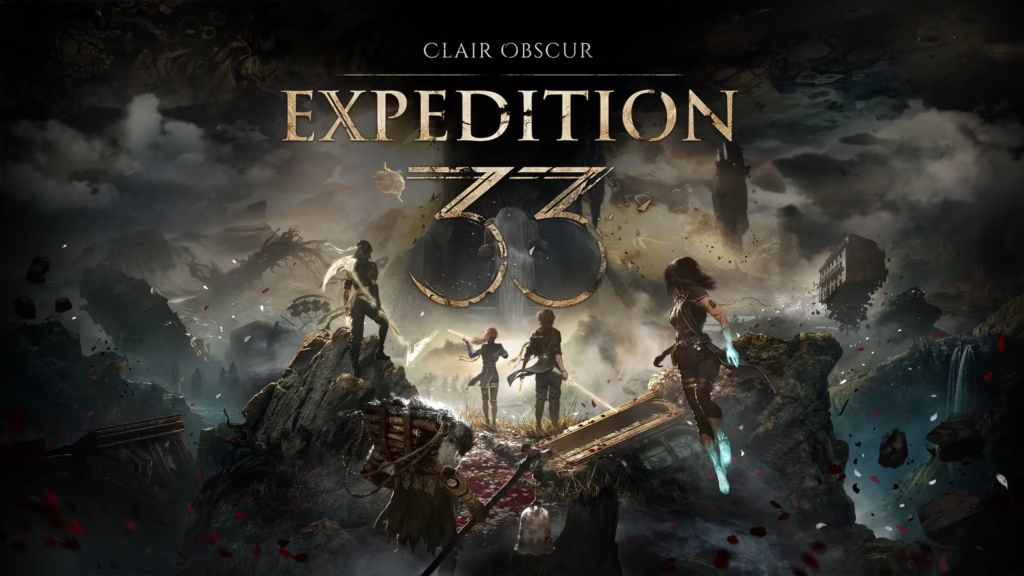
Enter Expedition 33—humanity’s final chance to unravel the mysteries of the “Clair Obscur,” a world doomed to a repeating cycle of decay. Your team of battle-hardened explorers, piloting unique mechs and wielding forgotten technologies, must venture into the shifting heart of the anomaly. This is not just a mission; it’s a race against an inescapable temporal loop where every decision, from resource allocation to alliance formation, echoes into your inevitable confrontation with the Architects of this broken reality. In this guide, we will break down the core strategies, team synergies, and meta-progression systems you need to survive the Eclipse Phase and rewrite the fate of a dying universe.
Table Of Content
- Core Gameplay and Tactical Systems
- How Does the Paintbrush Combat System Work in Practice?
- Managing Your Expedition’s Limited Time Before the Reset
- Character Synergy and Party Composition Strategies
- Visuals, Audio, and Artistic Direction
- Analyzing the Game’s Unique Belle Époque Art Style
- Soundtrack and Audio Design’s Role in Building Atmosphere
- Question-Answer
- How long is the main story in Clair Obscur: Expedition 33, and is there post-game content?
- I heard the combat uses a painting mechanic. Can you explain how it actually works?
- Is the game’s difficulty adjustable, and how punishing are the battles?
- What’s the balance between story cutscenes and actual gameplay?
- Can you customize your party’s abilities and roles, or are characters locked into a fixed class?
- How does the combat system in Clair Obscur: Expedition 33 work? Is it purely turn-based or does it have real-time elements?
You should play this game if you crave a deep, turn-based challenge wrapped in a visually arresting world. From the first moments, the graphics establish a breathtaking identity, blending luminous, painterly environments with stark, shadow-drenched architecture to create a constant, beautiful tension. This visual mastery is not just aesthetic; it directly informs the strategic combat, where light and darkness become active elements of every encounter, demanding thoughtful positioning and ability use beyond simple stat checks.
Clair Obscur: Expedition 33 Deluxe Edition
The core narrative is a compelling driver, pulling you through a world rich with mystery and consequence. The story unfolds with precision, revealing its secrets through environmental details and well-paced dialogue, avoiding excessive exposition. Your squad’s characters are the heart of this journey, each with distinct motivations and backstories that evolve meaningfully based on your choices, ensuring you are invested in every decision both on and off the battlefield.
Technical execution matches artistic ambition. The performance is consistently solid, maintaining a stable frame rate even during the most complex, effect-heavy skirmishes, which is critical for a game where a single misstep can turn the tide. Complementing the visuals is a phenomenal soundtrack that seamlessly shifts from haunting, ambient exploration themes to pulse-pounding tactical scores, fully immersing you in each moment. Considering the complete package–its strategic depth, artistic coherence, and technical polish–this title easily earns a high rating for fans of the genre and stands as a remarkable achievement in interactive storytelling.
Core Gameplay and Tactical Systems
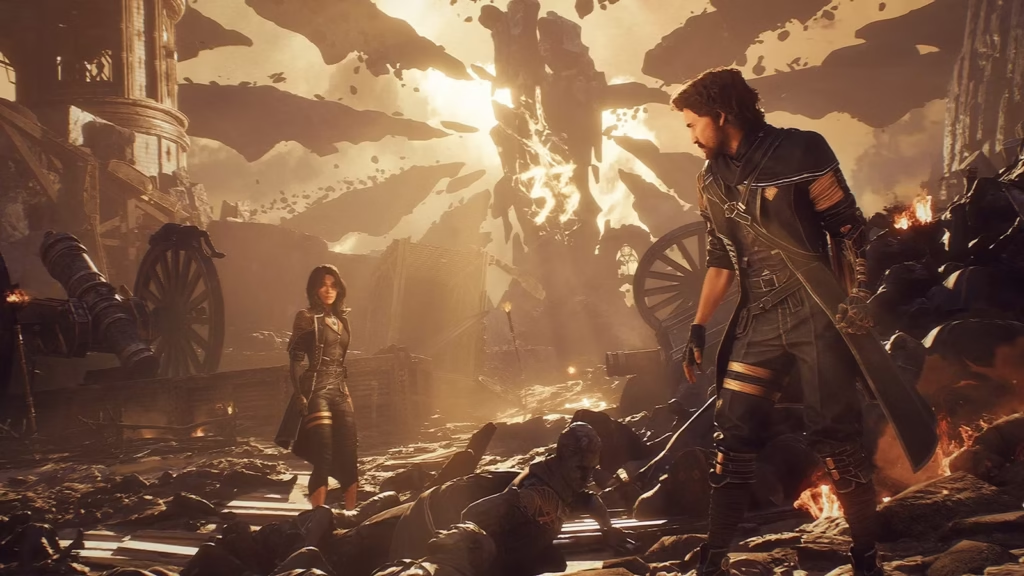
Master the turn-based rhythm to survive. The central mechanic requires you to input commands in sync with a dynamic on-screen beat, directly linking the phenomenal soundtrack to your attack potency and defensive timing. Missing the cue drastically reduces damage, making auditory focus as critical as strategic planning.
Character progression is deeply tied to narrative choices. Each party member’s unique abilities unlock not through generic levels, but by resolving personal story arcs and making pivotal decisions during key missions. This fusion ensures that every new combat skill feels earned and meaningful to the overarching plot.
| System | Function | Impact on Play |
|---|---|---|
| Resonance Meter | Builds via sequential synchronized hits | Unlocks powerful combo finishers for the entire squad |
| Environmental Grid | Alters terrain effects each turn | Forces constant positional reevaluation; tiles can buff, damage, or impede |
| Willpower Resource | Spent on special abilities and defense | Creates a tense risk-reward loop between aggressive plays and saving for counters |
| Adaptive Enemy AI | Prioritizes targeting based on your most-used tactics | Prevents repetitive strategies and encourages ability rotation |
Technical performance is rock-solid, maintaining a consistent frame rate even during the most elaborate, effect-heavy sequences. This reliability is crucial for nailing the precise timing demands of the battle system. The overall rating of the experience hinges on embracing its rhythmic core; those who engage with it will find unparalleled depth, while those who resist may struggle.
Resource management extends beyond the fight. Your expedition’s morale, visualized at the camp, modifies base stats and influences dialogue options. Choosing to rest, craft, or delve into character backstories directly affects your combat readiness, making downtime decisions a strategic layer unto themselves.
Clair Obscur: Expedition 33 Deluxe Edition
How Does the Paintbrush Combat System Work in Practice?

Master the turn-order timeline, as your party’s performance hinges on precise placement of actions to interrupt enemy casts. Each character wields a unique brush, with strokes translating directly to attack combos or defensive wards on the battlefield grid. The system demands you analyze enemy patterns and commit to a sequence of moves for the entire round, creating a high-stakes puzzle where positioning is as crucial as the selected ability.
Resource management extends beyond mana to “pigment,” a currency spent to empower these painted actions. A high rating in combat is achieved by chaining elemental effects; for instance, a water stroke followed by an electric brushstroke can douse and then electrocute a group. The vibrant graphics during these sequences are functional, clearly highlighting area-of-effect zones and telegraphing enemy intentions, which is critical for planning.
This mechanic deeply integrates with the story, as character growth unlocks new brush techniques that reflect their personal narrative arcs. The soundtrack dynamically shifts during these painted skirmishes, building tension during the planning phase and swelling during execution. Ultimately, this unique layer transforms standard turn-based gameplay into a visually strategic and deeply engaging core loop that feels both artistic and brutally tactical.
Managing Your Expedition’s Limited Time Before the Reset
Prioritize main story quests in the first cycle to unlock core mechanics and fast travel points; this directly boosts your party’s performance in subsequent runs. Side content is best tackled after acquiring key movement or combat upgrades.
The game’s core loop demands efficient time management. Your primary resources are the in-game days before the reset. A successful strategy balances several key pillars:
- Narrative Progression: Advance the central plot to permanently unlock new areas and mechanics. Each major story beat conquered is a permanent victory.
- Combat Proficiency: Grinding random encounters is inefficient. Focus on mastering the paintbrush system against bosses and scripted fights to earn substantial, one-time rewards that persist.
- Resource Allocation: Spend collected resources on permanent character upgrades and meta-progression items first, rather than consumables for a single cycle.
Technical aspects significantly impact your efficiency. A stable frame rate is crucial for executing precise actions in turn-based encounters. The evocative soundtrack serves as an audio cue for time of day, helping you track your remaining hours without constant menu checks. While the graphics are artistic, disabling certain post-processing effects can improve UI clarity during fast-paced strategic planning.
To optimize each run, follow this daily priority order:
- Complete one main objective that unlocks a new permanent feature.
- Gather zone-specific resources needed for your next key upgrade.
- Challenge one major boss or elite foe to test your improved tactics.
- If time remains, explore newly accessible paths for lore and gear.
Your final rating at the cycle’s end is calculated based on milestones achieved, not speed. Therefore, a methodical, goal-oriented approach to the gameplay yields better long-term results than frantic, unfocused exploration. The pressure of the reset enhances the narrative’s tension, making strategic choices about which story threads to pull each cycle the most compelling mechanic.
Character Synergy and Party Composition Strategies
Prioritize building your squad around Paintbrush combos that trigger powerful chain reactions, not just individual character strength. For example, pairing a hero who inflicts “Wet” status with another whose abilities cause “Electrified” creates area-of-effect damage, turning the tide of a difficult combat phase. The narrative directly rewards these synergies, with unique dialogue unlocking when specific duos frequently fight together.
Your front line must balance mitigation with threat generation. One character should specialize in taunts and shields, while a second applies armor-shredding debuffs. This allows your backline damage dealers to exploit weaknesses. The graphics and visual effects provide crucial feedback here; a shattered armor icon is your cue to unleash your heaviest single-target attacks.
Resource management is a core gameplay loop. Include at least one hero capable of restoring “Pigment” points mid-fight to maintain your team’s ability to execute high-cost techniques. Neglecting this can stall your offensive during prolonged boss encounters, directly impacting your mission success and the overarching story progression.
Adapt your party to the environment and enemy types revealed in the mission briefing. A zone filled with clustered foes demands area-control mages, while a boss with multiple phases requires a flexible composition with both sustained damage and burst potential. The game’s technical performance ensures these complex ability interactions remain fluid, which is critical for executing precise strategies under time pressure.
Ultimately, a high rating in endgame content is contingent on mastering synergy. The most effective teams treat their four members as a single, cohesive instrument, where every action sets up a more devastating reaction, blending strategic depth with the title’s distinctive artistic flair.
Visuals, Audio, and Artistic Direction
Prioritize experiencing this title on capable hardware to fully appreciate its painterly aesthetic, where every environment is a masterclass in impressionist-inspired design. The performance is generally solid, targeting 60 frames per second on current-gen consoles, though dense, particle-heavy combat sequences can cause occasional, minor hitches that do not significantly hinder the strategic flow.
The soundtrack is a profound narrative device, dynamically shifting from melancholic piano melodies during camp reflection to urgent, string-driven crescendos that heighten the tension of each turn-based encounter. This auditory layer deepens the emotional connection to the characters and their desperate plight. Voice acting is uniformly excellent, delivering the weighty narrative with conviction and nuance that avoids melodrama.
Artistic direction unifies every element, from the ethereal glow of the central mechanic’s visual effects to the subtly decaying world textures that reinforce the story‘s core tension. This cohesion between sight, sound, and gameplay elevates the entire experience, making it a strong contender for high marks in artistic rating categories. The audio mix deserves special praise for its clarity, ensuring critical ability cues are never lost amidst the orchestral score.
Analyzing the Game’s Unique Belle Époque Art Style
The visual direction is a primary driver for its high graphics rating, masterfully trading gritty realism for ornate, painterly elegance. This Belle Époque influence manifests in lavish character costumes with intricate lace, corsetry, and sweeping silhouettes, directly contrasting with the surreal, decaying environments. Performance remains stable, ensuring these detailed vistas and complex combat animations never stutter, solidifying the artistic commitment.
This aesthetic is not merely cosmetic; it deeply informs the narrative and story. The opulent art style visually represents the gilded age the characters are desperately trying to preserve, making the encroaching “obscur” threat feel more violently invasive. The soundtrack complements this with waltzes and period-inspired chamber music that twist into dissonance during enemy encounters, heightening the emotional stakes.
For players, prioritize exploring every optional area. The art team hides profound world-building in frescoed ceilings of ruined mansions and the fashion of spectral foes, offering narrative clues beyond dialogue. This style elevates the turn-based combat into a macabre ballet, where each special ability feels like a devastating brushstroke, perfectly marrying the game’s core systems with its unique identity.
Soundtrack and Audio Design’s Role in Building Atmosphere
Listen for the dynamic shift in the musical score the moment you enter a turn-based skirmish; the transition from ambient, period-appropriate strings to a driving, percussive theme is a masterclass in audio-driven tension. This isn’t just background music–it’s a vital gameplay signal that heightens focus and underscores the life-or-death stakes of each encounter.
The soundscape meticulously supports the narrative’s core premise of a relentless cycle. Environmental audio layers decay with each passing day, with once-bustling market squares falling eerily silent, their ambient tracks fading to whispers of wind and distant, foreboding chimes. This auditory decay is a constant, oppressive reminder of the looming reset, making the story’s pressure palpably felt beyond the interface.
Weapon and ability sounds are uniquely tailored to the game’s central mechanic, providing crucial tactical feedback. A successful, well-timed strike is rewarded with a distinctly satisfying and weightier acoustic signature compared to a glancing blow. This allows players to audibly gauge the effectiveness of their actions without relying solely on visual cues, streamlining decision-making in the heat of combat.
For the full immersive effect, play with a quality headset to appreciate the precise directional audio. It allows you to pinpoint off-screen threats and fully absorb the nuanced sound design in quiet, story-heavy moments, where subtle motifs and character-specific themes deepen emotional engagement without a single line of dialogue.
Question-Answer:
How long is the main story in Clair Obscur: Expedition 33, and is there post-game content?
The main story campaign takes approximately 25-30 hours to complete. This includes engaging with the core narrative and a moderate amount of side exploration. Upon finishing the story, a New Game+ mode becomes available. This mode allows you to restart the game while retaining your character progression and certain key items, offering increased difficulty and new strategic challenges for subsequent playthroughs.
I heard the combat uses a painting mechanic. Can you explain how it actually works?
Certainly. The painting mechanic is the central, innovative feature of combat. At the start of each character’s turn, a rotating wheel with segmented colors appears. You must stop a cursor on your desired color. This action “paints” the command. Different colors correspond to different ability types—like red for direct attacks or blue for magic. The precision of your stop matters: landing in the center of a segment empowers the ability, while hitting the edge results in a weaker version. It turns every action into a small, engaging skill check that keeps you focused.
Is the game’s difficulty adjustable, and how punishing are the battles?
Yes, the game provides multiple difficulty settings. You can select a mode that reduces enemy aggression for a more narrative-focused experience, or choose a harder setting that demands perfect tactical play. Battles can be quite punishing on standard difficulty and above. Resource management is strict, and enemy encounters are designed to exploit positional mistakes. A lost battle will typically send you back to the last save point, so strategic thinking and occasional grinding are recommended.
What’s the balance between story cutscenes and actual gameplay?
The game maintains a strong focus on gameplay. While the narrative setup and key story beats are delivered through well-produced cutscenes, they are concise. The majority of your time will be spent in tactical combat, exploring the beautiful but hazardous environments of the game world, and managing your expedition party. Story elements are often integrated into environmental details and character dialogues during exploration, avoiding long periods of passive watching.
Can you customize your party’s abilities and roles, or are characters locked into a fixed class?
Characters begin with a defined role, but the skill tree system allows for significant customization. Each character has an extensive web of abilities to unlock. You can invest points to enhance their core role—making a defender more resilient, for instance—or you can branch out to grant them secondary capabilities, like giving a healer some offensive magic options. This lets you tailor your party’s composition to fit your preferred tactical style, though their base stats still encourage certain specializations.
How does the combat system in Clair Obscur: Expedition 33 work? Is it purely turn-based or does it have real-time elements?
The combat system is a turn-based tactical system with a unique central mechanic. Each turn, a painting called the “Maelstrom” appears in the battlefield, displaying a specific sequence of actions and colors. Your party members, each aligned with a different color, must match their attacks to this sequence. Executing attacks in the correct order builds a combo multiplier, significantly increasing damage. There is no real-time action; planning and sequencing are everything. Positioning on the battlefield also matters for area-of-effect abilities and avoiding enemy attacks, making it a deep, puzzle-like layer on top of traditional turn-based structure.


